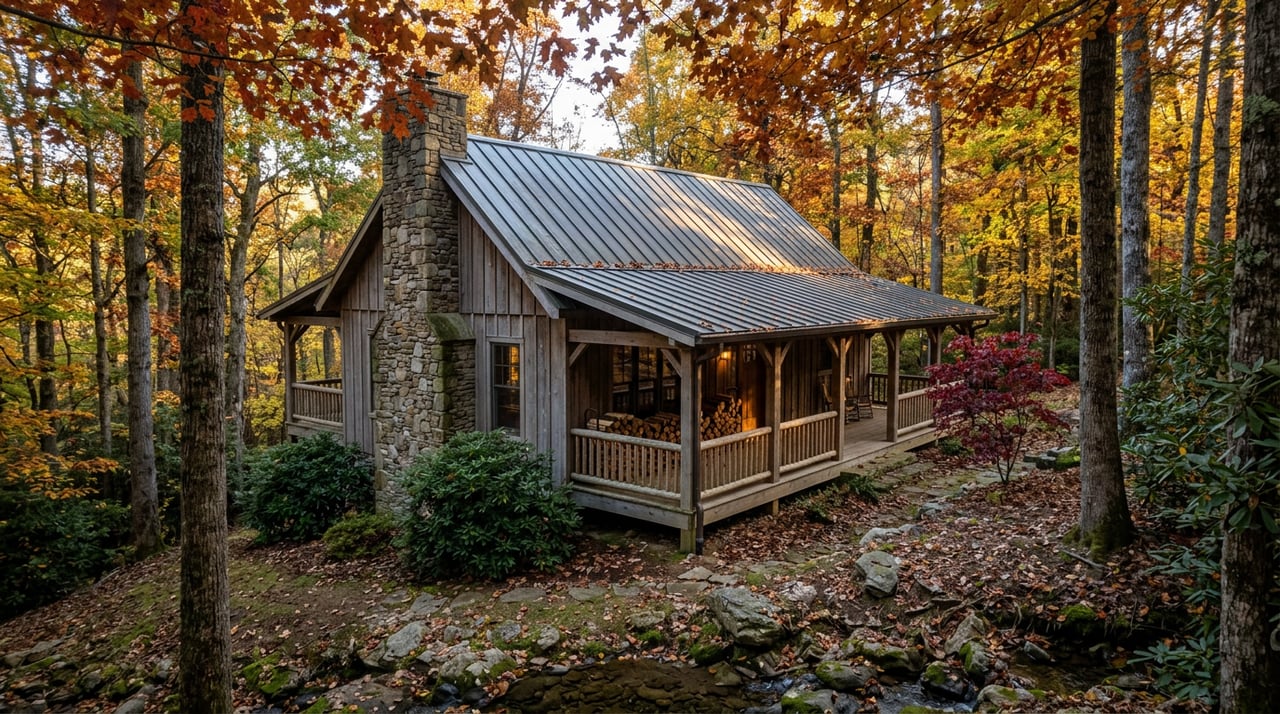
The first cool mornings after Labor Day change the rhythm at both bridges on Middle Burningtown Road. Trucks that spent summer mostly parked start showing up again, and by the time the leaves turn, the creek below Burningtown Baptist Church is doing what it does every October: filling back up with fish that weren't there in August.
If you've lived here a while, you already know the two bridges on Middle Burningtown Road. They're the obvious stock points, the ones NC Wildlife trucks hit directly, and the ones every first-timer finds because they're the easiest pull-offs on the road. What most people don't know is that this fall's run is arriving on a different schedule than the ones before it, and that changes which of the creek's access points are worth your time between now and Thanksgiving.
The Two Bridges Everyone Starts At
Middle Burningtown Road has two bridges that serve as the creek's primary stocking points, and they're good for a reason: they're the easiest way down to the water, and they're where the hatchery trucks actually stop. Expect fish in the 10 to 12 inch range, with a few bigger ones holding in the deeper runs. The tree canopy over this stretch stays thick enough to keep the water cool even into early fall, which is part of why this section holds fish longer than open, sun-exposed water would.
If you're introducing a kid to fishing, this is the spot. The wading is easy, some fish can be caught right from the bank without getting in the water, and it doesn't take technical gear. A basic spinning rod and something simple under a bobber will do the job.
Down Lower Burningtown Road, Where the Locals Actually Go
Once those two bridges get crowded, or once you've fished them enough times to want something quieter, the creek keeps giving you options if you know where to look on Lower Burningtown Road. Turn off Middle Burningtown Road at the stop sign and head down, and you'll find three more named access points that don't show up on generic fishing guides:
- Kelly Cove Road bridge — a straightforward pull-off, less trafficked than the Middle Burningtown bridges
- Younce Creek bridge — right where a number of longtime residents actually live, along the tributary that feeds into the main creek
- Welch Road bridge — the farthest of the three, and usually the quietest
Keep going toward Tellico Road and there's one more worth knowing: the bridge at Dragonfly, where Lower Burningtown Road meets Tellico Road. It's a bit of a drive from the church, but it's rarely fished hard, which is exactly the point if you're after some solitude on a Saturday morning.
There's also the Needmore game lands nearby, which offers additional public access without needing permission from a private landowner, a detail that matters more on a creek like this one, where most of the surrounding land is privately held family property rather than public right-of-way.
This Fall's Run Is Arriving Lighter Than Usual
Here's the part that's different this year, and it's not something you'll find on the older fishing guides still floating around online.
The Bobby N. Setzer State Fish Hatchery near Brevard, which produces more than 75 percent of the trout the state stocks statewide, began a $50 million renovation in 2026. The North Carolina Wildlife Resources Commission has said this will mean a real reduction in trout stockings across 2026, 2027, and potentially into 2028, even with the commission buying the Glady Fork Fish Hatchery in Transylvania County and sourcing additional fish from private hatcheries to soften the gap.
The practical effect for hatchery-supported water like Burningtown Creek is a stocking schedule that's compressed into two windows, spring and fall, rather than spread out with extra runs through the summer the way it might in a normal year. That's the pattern the state has confirmed for hatchery-supported waters generally. Burningtown Creek isn't a marquee destination like the Davidson River or the Tuckasegee, which tend to get priority when supply is tight, so this year's two stocking windows likely carry more relative weight here than they would on a bigger river with a longer stocking calendar.
What that means if you fish this creek regularly: the days right after a stocking truck comes through are going to matter more this fall than they have in past years, because there's less chance of a mid-season top-off filling in the gaps. If you've always fished Burningtown Creek on a loose, whenever-I-feel-like-it schedule, this is the year to pay a little more attention to timing.
The Rule That Actually Matters Here
Burningtown Creek carries a Hatchery Supported classification, which is worth knowing even if you've fished it for years, because it's what governs what you can legally do here. There's no minimum size limit and no restriction on bait, natural or artificial. The daily creel limit is seven trout. You'll need a standard North Carolina fishing license plus a trout license to fish it legally, same as any other public mountain trout water in the state.
The one date that trips people up every year is the closed season. Hatchery-supported waters like this one shut down each year from March 1 through the first Friday in April, no fishing allowed at all during that stretch. This year that meant the creek was closed March 1 through April 3, reopening at 7 a.m. on April 4. It's not relevant to your plans this week, but it's worth having in your head for next spring, because the closure catches people off guard every single year, and it always lands right when the weather starts tempting people back outside.
None of this is complicated once you know it, but it's the kind of detail that separates someone who fishes this creek out of habit from someone who's actually paying attention to what's changed.
Why This Creek Still Feels Like a Secret
Even with all this access, Burningtown Creek doesn't get heavy pressure. It's a small stream, well stocked for its size, and it doesn't draw the crowds that the bigger rivers around Franklin do. That's part of why it's stayed a place families bring kids to catch their first trout, and why plenty of longtime residents treat an evening at the creek as routine as a walk around the block, dog on a leash, kid with a rod, nothing fancier than that.
That's the version of Burningtown that doesn't show up in the property listings or the Census tables. It's a place where the creek behind the church still runs the way it always has, where everybody has an opinion about which bridge is holding fish this week, and where the fall stocking trucks are as much a seasonal marker as the leaves changing.
If you're already living that version of Burningtown, the only thing different about this fall is knowing which two windows to plan around and which bridges are worth the extra five minutes of driving. Everything else about the creek is exactly what it's always been.
If you ever find yourself thinking about what a piece of land or a home along this creek is actually worth, or what it takes to buy or sell in a community like this one, that's a conversation for another day. For now, go find out which bridge is holding fish this week.
Questions about property along Burningtown Creek or anywhere else in the Franklin area? Matt Jackson is always glad to talk, no pressure, just a straight answer. Let's Connect.
This article is general information, not legal, tax or financial advice. Consult a qualified professional about your situation.