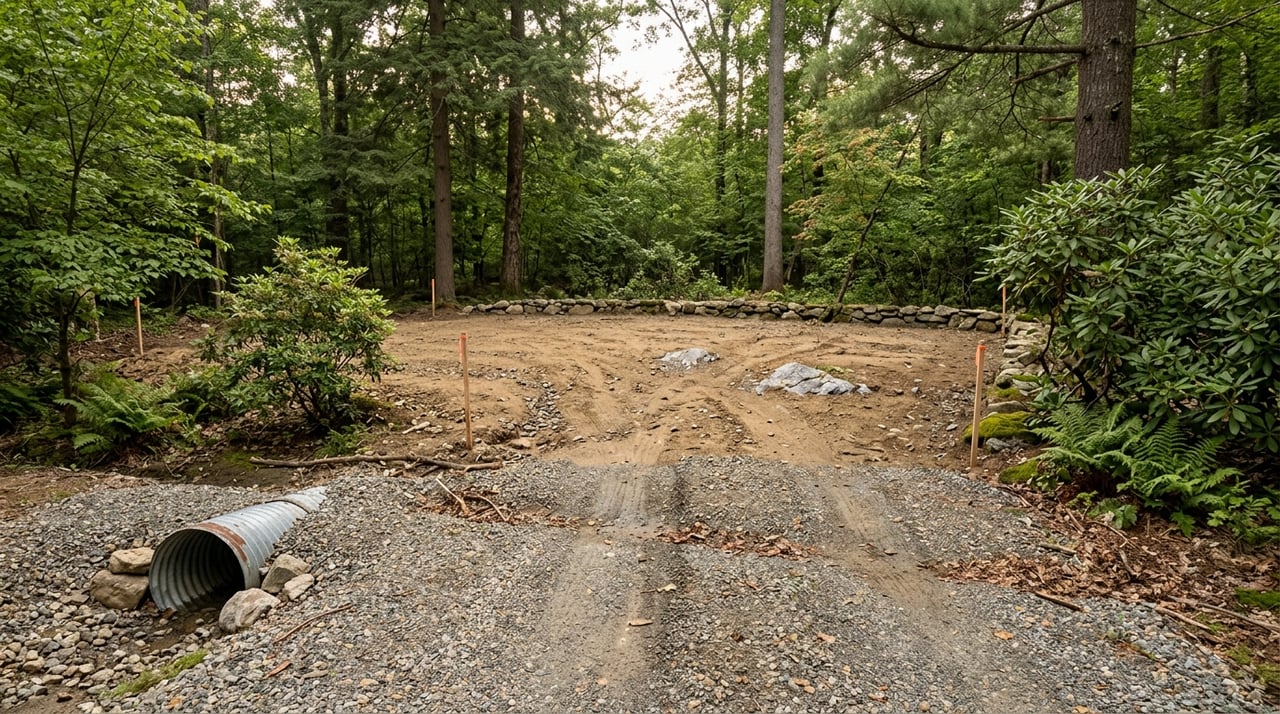
Buying land in Otto can feel simple at first. You see a few acres, a mountain view, and the idea of a cabin, garden, or quiet getaway starts to come together fast. But in this part of Macon County, the real question is not just how much land you are buying. It is how much of that land will actually work for the life you want to build. This guide will help you think through access, septic, wells, slope, and other mountain-specific details before you move forward. Let’s dive in.
Why Otto land needs a closer look
Otto is a rural, unincorporated community in Macon County near the North Carolina and Georgia border along US 441. That setting is a big part of the appeal. You get privacy, scenery, and flexibility that many buyers are looking for when they start exploring Western North Carolina land.
At the same time, rural mountain land comes with a different set of checks than a typical in-town lot. In unincorporated parts of Macon County, the early review process focuses heavily on subdivision rules, floodplain and watershed review, and well and septic permitting. That means your due diligence should be practical and site-specific from day one.
Usable acreage matters most
One of the biggest mistakes buyers make is treating deeded acreage like fully usable acreage. In Otto, that can lead to disappointment. A parcel may show several acres on paper, but slope, drainage, stream areas, and septic layout can reduce where you can actually place a home, driveway, garden, or outbuilding.
Macon County subdivision rules place strong emphasis on topography and natural features. Floodplain, landslide hazard areas, riparian zones, wetlands, slopes above 30%, native woodlands, and scenic viewsheds all matter in how land is reviewed and developed. In plain terms, mountain land often asks you to work with the site instead of forcing the site to fit a flat-land plan.
Start with the county GIS map
Before you get too attached to a property, pull up the Macon County GIS system. The county provides parcel lines, contour data, FEMA flood zones, soils, rivers, street centerlines, structures, subdivisions, and related layers. That gives you a useful first look at how the land may function.
GIS is not a substitute for a survey or site work, but it is a smart screening tool. It can help you spot steep grades, creek corridors, floodplain concerns, and possible access issues before you make an offer or shorten your due diligence window.
Access can shape the whole project
In mountain property, access is never a small detail. It affects cost, convenience, safety, and future usability. A beautiful tract can become much less practical if the driveway location is difficult, the road is steep, or access is only through a limited easement.
If the parcel will connect to a state-maintained road, driveway access permitting through NCDOT applies. According to NCDOT, anyone developing property or changing access to the State Highway System must obtain a driveway permit, and the application itself carries no fee.
Macon County also has road standards that address grades, drainage features, and culverts. If a subdivision road does not meet county standards, the final plat must disclose that emergency vehicle access may be limited. That is worth paying attention to if you are considering a cabin, a full-time home, or land you may want to improve later.
Questions to ask about road access
- Is the access road public, private, shared, or easement-only?
- Who maintains the road?
- Who pays for gravel, culvert repair, or drainage work?
- Is snow or ice removal handled by anyone?
- Does the road meet county standards for emergency access?
- If there is a gate, does it meet the county's access requirements?
If the tract is inside a subdivision, road maintenance may also be tied to an HOA or similar structure. That is another detail worth confirming early.
Septic is often the first major test
For many Otto properties, septic feasibility is one of the most important parts of due diligence. In areas without municipal sewer, an on-site septic system is the standard solution. Macon County Environmental Health handles permitting, inspection, and approval for septic systems.
The county states that an Improvement Permit and an Authorization for Wastewater System Construction must be obtained before installing an on-site wastewater system or receiving building permits. Septic design depends on topography, soil characteristics, soil depth, and available space. So even if a parcel looks buildable from the road, the final answer depends on what the site can support.
After installation, the county issues an Operations Permit. Macon County also states that a new house on septic cannot receive power until that permit is issued. That is a good reminder that septic is not just one box to check. It affects the full timeline of getting a home built and connected.
Wells and utilities are parcel-specific
Private wells are also regulated in Macon County. The county's well program says no private drinking-water well may be constructed, repaired, or abandoned without an authorized permit, and the well program requires site and septic documentation.
This matters because water and wastewater planning usually work together on rural land. If you are thinking about a cabin, manufactured home, or other future build, you want to understand early how the well and septic pieces may interact on the site.
Utility service is another area where assumptions can cause trouble. Macon County planning lists utility contacts such as Duke Energy, Town of Highlands Electric, Haywood EMC, and Blue Ridge Electric, but service availability is still parcel-specific. A remote property may not already have power at the build site, even if utility lines appear nearby.
Floodplain and watershed review come early
Macon County's development checklist says special flood hazard areas and watershed districts can impose development restrictions and separate permits. If part of the property lies near a creek, low area, or drainage corridor, check that status as early as possible.
This is one reason Otto land deserves a careful first pass before emotions take over. Water features can add beauty to a property, but they can also narrow where you can place structures or disturb the ground.
Clearing and grading may trigger extra steps
If you plan to clear land, cut in a driveway, or create a homesite, ask about erosion-control requirements before work begins. Macon County's soil erosion ordinance says an erosion and sedimentation control plan is required before more than 1/2 acre is disturbed. The ordinance also adds special rules for steep slopes.
That is especially relevant in mountain terrain where runoff can move fast. Even a modest homesite project may involve more planning than buyers expect if the land is steep or if grading extends beyond a small footprint.
Think realistically about gardens and hobby use
A lot of buyers picture a cabin plus a garden, a few fruit trees, or light hobby-farm use. That can be possible in Otto, but it depends on the actual site conditions. Soils, sun exposure, drainage, and slope all affect how well the land supports those plans.
Macon County GIS includes a soils layer, which can help with early screening. The main takeaway is simple: do not assume the whole parcel performs the same way. One section may be well suited for a homesite, while another may stay too steep, wet, shaded, or constrained for the use you have in mind.
A survey helps connect the details
A survey is one of the best tools for making a land purchase feel clearer and less stressful. It helps you compare the parcel to the deed, recorded plats, easements, and road frontage. That matters even more in rural mountain areas where boundaries, shared access, and old plats can create confusion.
If you are buying from out of town, this step can bring a lot of peace of mind. Clear boundaries and a better understanding of access can keep small surprises from becoming expensive ones later.
A practical Otto land checklist
Before you move forward on land or small acreage in Otto, make sure you can answer these questions:
- Where is the best build site on the parcel?
- How much of the land is realistically usable?
- Is the access public, private, shared, or by easement?
- Will a driveway permit be needed from NCDOT?
- Has septic feasibility been confirmed through Macon County Environmental Health?
- What will be required for a private well?
- Is power available at the likely build site?
- Are any floodplain or watershed restrictions in play?
- Will clearing or grading trigger erosion-control requirements?
- Does a current survey match the deed, plats, and recorded access?
Otto land can be a great fit with the right expectations
Land in Otto can be a strong fit if you want a mountain cabin site, a quiet full-time homesite, or a small-acreage property with room to spread out. The area offers the rural character many buyers want, and Macon County's approach reflects that focus on natural features and mountain conditions.
The key is going in with clear expectations. In Otto, land buying is less about chasing a simple acre count and more about understanding how the site really works. When you verify access, septic, well approval, slope, drainage, and floodplain or watershed issues up front, you put yourself in a much better position to buy with confidence.
If you want calm, local guidance as you sort through Otto land options, Matt Jackson is here to help you look past the listing photos and focus on what will actually work for your goals.
FAQs
What should you check before buying land in Otto, NC?
- You should check access, septic feasibility, private well requirements, slope, drainage, floodplain or watershed status, utility availability, and whether the usable area matches your plans.
How important is septic approval for Otto land?
- Septic approval is very important because Macon County requires an Improvement Permit and an Authorization for Wastewater System Construction before installation and before building permits can move forward.
Can you assume all acreage on an Otto property is buildable?
- No. In Macon County, slope, topography, riparian areas, floodplain, drainage, and septic layout can reduce how much of a parcel is actually usable for building or other improvements.
Do you need a permit for a driveway on Otto land?
- If access comes from a state-maintained road, NCDOT says a driveway permit is required for development or changes to access on the State Highway System.
What tools help evaluate land in Macon County?
- Macon County GIS is a useful starting point because it shows parcel lines, contours, flood zones, soils, rivers, roads, structures, and subdivision-related layers that can help you screen a property early.
Can Otto land work for a cabin, garden, or hobby property?
- It can, but only if the site's soils, sun, drainage, slope, access, septic, and well conditions support those uses in the area you plan to improve.